How to Choose the Best Automatic Dishwasher for Your Home?
When choosing the best automatic dishwasher for your home, it’s essential to consider various factors. Industry expert, Sarah Thompson, once said, “The right appliance can save you time and energy.” Finding an automatic dishwasher that fits your lifestyle can simplify your daily routine.
Automatic dishwashers come in various sizes, styles, and features. You might prefer a compact model if you have limited kitchen space. Consider the noise level too; a quieter unit can enhance your cooking experience. Look for energy-efficient models that help reduce utility bills. However, keep in mind that the most expensive model may not always be the best choice for your needs.
It's worth reflecting on your dishwashing habits. Do you often wash a large load or just a few items? Some dishwashers offer specialized settings that cater to specific types of dishes. This versatility can improve performance but may also complicate your user experience. Finding a balance between functionality and ease of use is crucial in ensuring your investment meets expectations.
Factors to Consider When Choosing an Automatic Dishwasher for Your Home
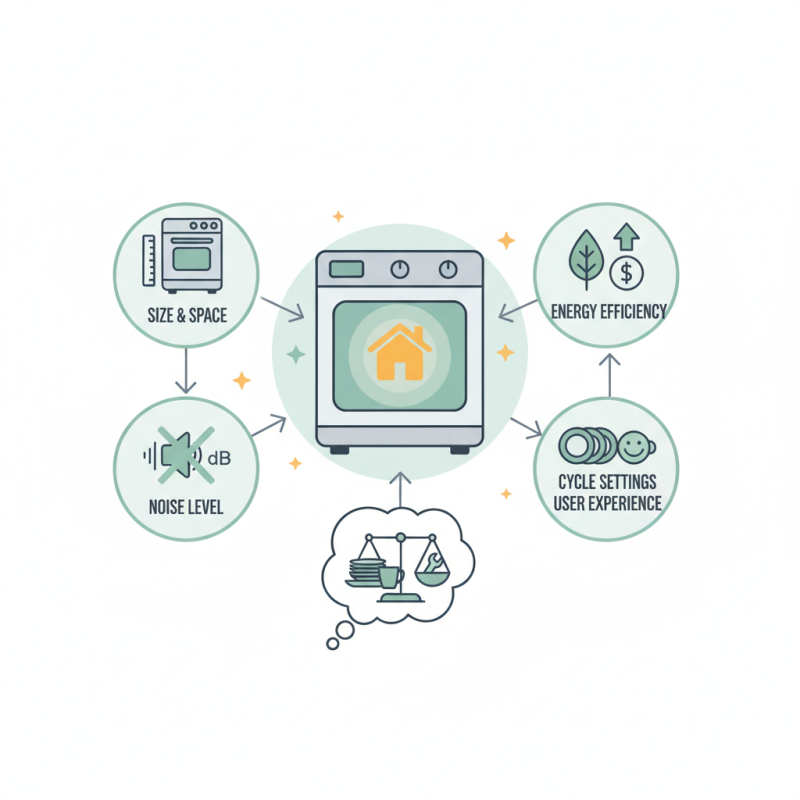
Choosing the right automatic dishwasher is crucial for every household.
Start by assessing your kitchen space. Measure the area where the dishwasher will fit. If it's too big, it might not work.
If it's too small, you might miss out on features. Consider the loading capacity as well.
A larger model may not be necessary for a couple.
Next, think about energy efficiency. Look for models that save water and electricity.
While these might cost more upfront, they will save money in the long run.
Noise level is another essential factor. Some dishwashers can be surprisingly loud,
disrupting family time or late-night relaxation. Check online reviews to find those quiet models that perform well.
Don't forget about wash cycles. Different dishes require different settings. If you often entertain guests,
select a model with versatile washing options. You might find that some cycles are not effective for crusty pots
or delicate glassware. Finally, reflect on your lifestyle. A busy family may need a quicker cleaning cycle.
A single professional might value efficiency over silence. Keep all these factors in mind, and personalize your choice accordingly.
Understanding Dishwasher Types: Built-in, Portable, and Compact Models
When selecting an automatic dishwasher, understanding the types available is crucial.
Built-in models are popular for permanent setups. They integrate seamlessly into your kitchen.
Their large capacities make them ideal for families. However, installation can be a hassle. It often requires professional help, which adds to the overall cost.
Portable models offer flexibility. They can be moved around and don’t need permanent installation.
This makes them perfect for renters or small homes. Yet, they usually have smaller capacities, which might not suit larger households.
Think about your needs carefully. Compact models are another option. They fit well in tight spaces.
Their efficiency is admirable, but they often lack the features of larger counterparts.
Reflect on your kitchen layout and lifestyle. Each type has its pros and cons.
Consider the space available. Efficiency matters, but so does ease of use.
Assessing your needs is vital before making a choice.
The dishwasher should complement your home, not complicate it.
Energy Efficiency Ratings: How to Evaluate and Compare Dishwasher Ratings
When selecting an automatic dishwasher, energy efficiency ratings play a crucial role. The U.S. Department of Energy states that energy-efficient models can save about 10% on utility bills. Look for Energy Star certification. These models typically use less water and energy compared to standard ones. A standard dishwasher may consume up to 6 gallons per cycle, while Energy Star models may use around 3 gallons.
Consider the energy consumption in kilowatt-hours (kWh) per year. Most dishwashers consume between 300 and 1,200 kWh yearly. A model with lower kWh is more efficient. However, it's essential to balance efficiency with performance. Not all high-efficiency models clean effectively. Some tests show that lower energy models may struggle with tough stains.
Tips: Always compare the Estimated Yearly Operating Cost on the EnergyGuide label. Remember, efficiency isn't the only factor to consider. Noise levels and capacity are also vital. Look for a model that fits your needs. Don't rush into a decision. Read reviews and reports for insights into real-world performance.
Energy Efficiency Ratings of Automatic Dishwashers
This chart compares the energy efficiency ratings of various automatic dishwashers. Higher ratings indicate better energy efficiency, ultimately leading to lower energy consumption and cost savings for homeowners.
Key Features to Look for in Modern Dishwashers: Smart Technology Usage
When choosing an automatic dishwasher, smart technology is a crucial consideration. Industry reports indicate that over 50% of modern dishwashers now incorporate smart features. These features enhance convenience and efficiency. For instance, Wi-Fi connectivity allows users to monitor cycles remotely. Notifications about cycle completion help save time. However, smart technology can sometimes complicate simple tasks.
Another fascinating aspect is the integration of sensors. Many new models adjust water usage based on load size and soil levels. Data suggests that this can reduce water consumption by up to 30%. Yet, not every sensor works perfectly in practice. Users may find inconsistencies in cleaning performance with heavily soiled dishes.
Finally, energy efficiency ratings should not be overlooked. Dishwashers with high ENERGY STAR certifications can lead to significant savings on utility bills. Research shows that efficient models use roughly 4 gallons per cycle. However, effectiveness can vary between brands. Some consumers report that eco-friendly settings do not always meet their cleaning expectations.