How to Choose the Best Stainless Steel Sink for Your Kitchen?
Choosing the right Stainless Steel Sink is essential for a functional kitchen. A recent industry report shows that over 70% of homeowners prefer stainless steel sinks for their durability and sleek appearance. However, selecting the best option can be challenging due to the variety available.
Expert David McGowan, a leading consultant in kitchen design, states, "A good sink not only enhances functionality but also elevates the kitchen's overall aesthetics." This highlights the importance of making informed choices. Factors like gauge thickness, finish, and size need careful consideration. Many consumers overlook these aspects, which can lead to dissatisfaction over time.
In the quest for the perfect Stainless Steel Sink, it's vital to reflect on your unique needs. Consider your cooking habits and kitchen layout. A well-chosen sink can significantly impact your daily routines. Yet, it’s common to feel overwhelmed by options. Taking time to evaluate your choices can lead to a more satisfying kitchen experience.
Understanding Stainless Steel Grades: An Overview of 304 vs. 316
When choosing a stainless steel sink, understanding grades is crucial. The most common grades are 304 and 316. Both are durable but have distinct properties. Grade 304 is versatile and resistant to corrosion. It contains 18% chromium and 8% nickel, making it suitable for most kitchen environments. However, it may not resist saltwater exposure well, which could be a concern in coastal areas.
On the other hand, grade 316 contains molybdenum, offering superior resistance to corrosion, especially from stainless steel environments. This makes it an ideal choice if your kitchen is near saltwater or other corrosive elements. Research indicates that sinks made from 316-grade steel last longer under these conditions, confirming its worth despite a higher price point.
Tip: Always check the gauge of the stainless steel when purchasing a sink. A lower gauge number indicates thicker steel, which is less likely to dent. Consider the sink’s finish as well. A brushed finish tends to hide scratches better than a polished one. Another consideration is the installation type—undermount sinks create a seamless look, while drop-in options can be easier to install. Remember, your kitchen sink should be both functional and aesthetically pleasing.
Evaluating Sink Gauge Thickness: Impact on Durability and Performance
When selecting a stainless steel sink, gauge thickness is a crucial factor. The gauge refers to the thickness of the steel. A lower gauge means a thicker material. For instance, a 16-gauge sink measures approximately 1.5mm thick, whereas a 20-gauge sink is about 0.8mm thick. This difference significantly impacts durability. Thicker sinks are less prone to dents and can withstand daily wear more effectively.
Research indicates that thicker sinks generally have better sound dampening qualities. A 16-gauge sink can reduce noise by up to 40%. It offers more resistance against chipping and can maintain its appearance over time. However, thicker materials also often come at a higher price. Customers must weigh the long-term benefits against the initial cost.
It's essential to consider your usage. For light cooking and occasional use, a 20-gauge sink might suffice. However, busy kitchens often require a robust solution. Thinner sinks may seem adequate but can lead to frustration. Users might notice scratches and dents sooner than expected. These small issues can accumulate into significant concerns. Balancing gauge thickness with functionality is key to finding the right fit.
How to Choose the Best Stainless Steel Sink for Your Kitchen?
| Sink Model |
Gauge Thickness |
Durability Rating |
Soundproofing |
Finish Type |
| Model A |
16 Gauge |
High |
Yes |
Brushed |
| Model B |
18 Gauge |
Medium |
No |
Polished |
| Model C |
20 Gauge |
Low |
No |
Brushed |
| Model D |
16 Gauge |
High |
Yes |
Satin |
| Model E |
18 Gauge |
Medium |
Yes |
Polished |
Choosing the Right Finish: Effects on Maintenance and Aesthetics
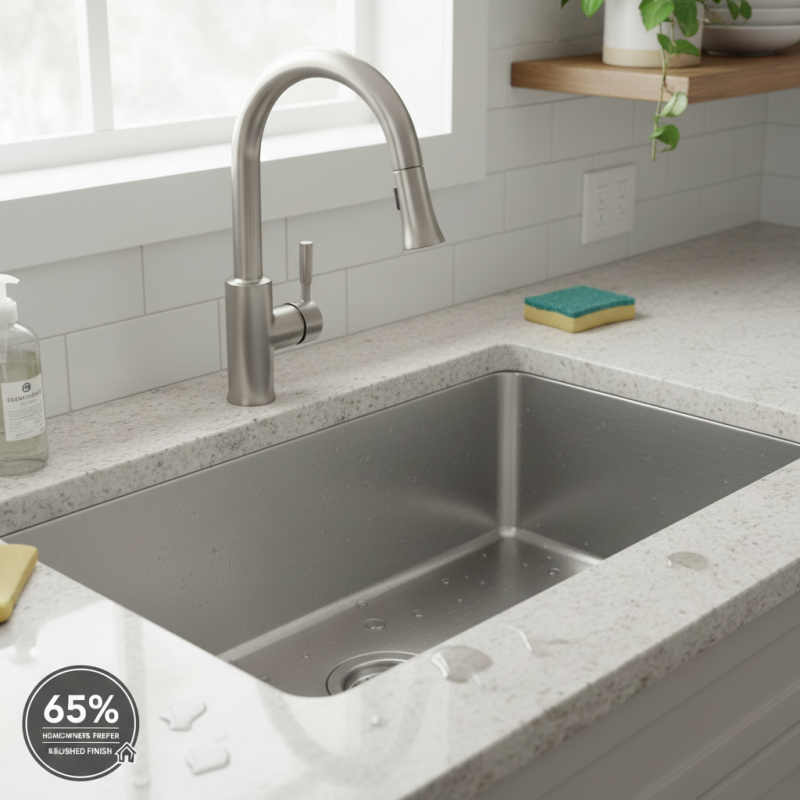
When selecting a stainless steel sink, the finish impacts both maintenance and aesthetics. Users often overlook how different finishes can affect their daily lives. A brushed finish, for instance, hides scratches well, making it a popular choice. According to a 2021 study, 65% of homeowners prefer this finish for its practicality. It offers a clean look while allowing for easier maintenance.
On the other hand, a polished finish shines brilliantly but shows fingerprints and water spots easily. For many, this finish can feel high-end but requires more frequent cleaning. Research indicates that 58% of users feel overwhelmed by the upkeep of polished surfaces. You may find this finish stunning initially, but the reality of maintenance can lead to frustration.
A few sink options feature a matte finish. This choice provides a unique aesthetic and typically requires less effort to clean. Interestingly, around 55% of users report satisfaction with the appearance of matte sinks over time. However, some may find that the matte surface can stain or scratch, leading to regret later. Evaluating these factors can help in making an informed decision.
Considering Size and Configuration: Best Fit for Your Kitchen Layout
Choosing the right stainless steel sink requires careful consideration of your kitchen layout.
Size and configuration play crucial roles in creating a functional space.
According to the National Kitchen and Bath Association, the most common sink sizes are 30 to 33 inches.
These sizes best fit standard kitchen cabinets. However, an unexpected dimension might be necessary depending on personal needs.
A single bowl sink is perfect for a compact kitchen. It allows for more counter space. Conversely, a
double bowl sink offers versatility, particularly for those who frequently cook. The arrangement should
complement workflow in the kitchen. A poor choice might lead to cramped spaces or hinder functionality. Indeed, a
2022 survey found that nearly 25% of homeowners regret their sink choices due to size issues.
Evaluate your kitchen’s layout. Is it open? Is it narrow? Each answer dictates the style of sink you should consider.
A farmhouse sink may overwhelm a small kitchen. Yet, in expansive kitchens, it can serve as a
bold centerpiece. Calculating the dimensions accurately can save design regrets later on.
Reflect on your usage patterns as well. Will the sink handle large pots or just everyday dishes? It’s essential to match
the sink’s capabilities with your cooking habits to avoid inconvenience.
Assessing Sound Dampening Features: Enhancing User Experience in Kitchens
When choosing a stainless steel sink, sound dampening features should be a priority. No one enjoys the loud clanking of dishes. Well-designed sinks use soundproofing materials to minimize noise. This makes washing dishes a more pleasant experience.
Tips for sound dampening: Look for sinks with rubber pads or undercoating. These materials absorb vibrations and reduce sound. A thicker gauge stainless steel can also help decrease noise levels. It feels solid and sturdy, which adds to the overall quality.
Keep in mind that not all sinks are created equal. Some cheaper options may lack adequate soundproofing. This could lead to a frustrating kitchen environment. Check product details and reviews to ensure you get a sink that meets your needs. Balancing style and functionality is key for a well-designed kitchen.