China’s electric toaster industry serves retailers, hospitality groups, and private-label brands worldwide. This guide examines ten Chinese suppliers for global buyers seeking reliable production partners. It focuses on heating performance, browning consistency, materials, factory capability, and export experience. Small details matter. A loose lever, uneven slots, or a fragile crumb tray can damage customer trust.
Donald Norman, a respected design and usability expert, said, “Design is really an act of communication.” His point applies strongly to every Electric Toaster. Controls should feel clear, surfaces should remain practical, and cleaning should not become a daily frustration. Buyers should inspect samples carefully. Ask about thermostat testing, heating-element quality, insulation, packaging strength, minimum order quantities, and after-sales support. Factory audits and independent product testing also deserve attention.
No supplier ranking is perfect. Product quality may change between samples and mass production. Some factories communicate well but provide weak technical documents. Others offer attractive prices but limited customization. That uncertainty requires patience. Global buyers should compare verified records, production capacity, response speed, and compliance documentation for their target markets. The strongest supplier is not always the cheapest one. It is the partner that delivers stable performance, honest communication, and measurable quality over time. This overview offers a practical starting point, but final decisions still require factory verification, sample approval, and contract-level clarity. Even experienced buyers can miss hidden costs. That is where careful review becomes valuable.
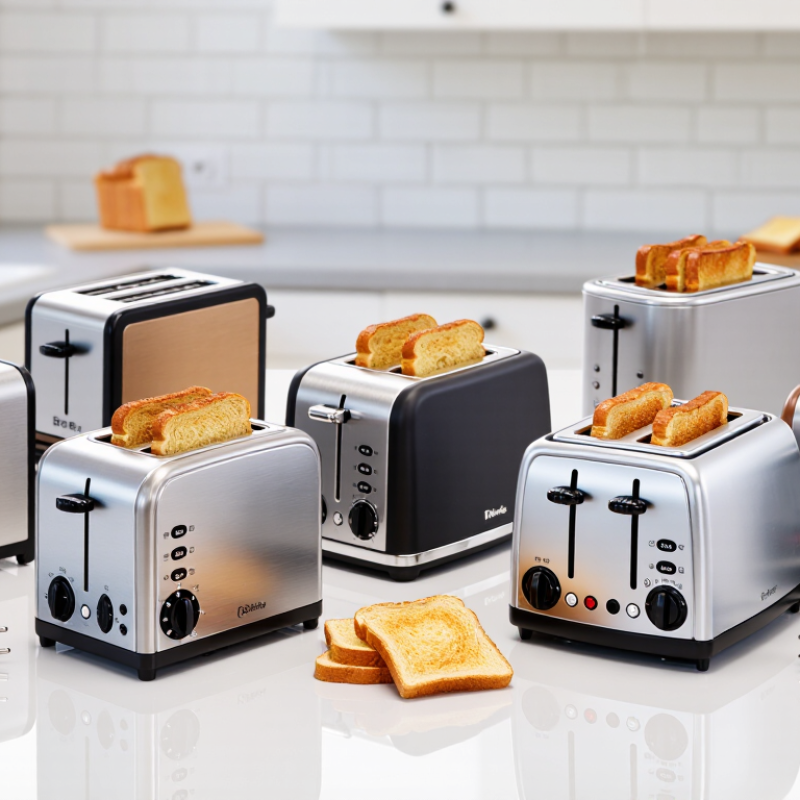
A reliable electric toaster supplier in China is defined by evidence, not polished catalog pages. Buyers should request factory audit records, production photographs, traceable batch codes, and recent test reports. The IEC 60335-2-9 standard covers household grillers, toasters, and similar appliances, including safeguards against overheating and electrical hazards. Suppliers should show how their products meet applicable versions of this standard.
Look beyond price. The International Trade Centre’s Trade Map classifies electric toasters under HS 851672, helping buyers compare export activity and shipment consistency. The ISO Survey 2023 recorded more than 1.9 million ISO 9001 certificates in China, yet certification alone does not guarantee stable toaster quality. Ask for incoming-material inspection rates, heating-element failure data, and corrective-action records. Small details matter.
Test the toaster after repeated cycles, not only during a factory demonstration. Check browning consistency, cord temperature, lever durability, crumb-tray fit, and packaging damage after transport. A capable supplier should provide pre-shipment inspection and retain samples from each production batch. Independent laboratory testing adds credibility, especially for electrical safety and electromagnetic compatibility.
A neat report can still hide weak process control. I would question any supplier showing perfect results without a single deviation. Real factories sometimes discover problems. What matters is whether they document, investigate, and correct them quickly.

The leading Chinese toaster suppliers differ more in execution than appearance. Most offer two-slice and four-slice models, stainless-steel shells, adjustable browning, and automatic shutoff. The real gap appears in heating stability, batch inspection, and export support. According to Grand View Research, the global small kitchen appliances market is expanding steadily, increasing pressure on suppliers to control quality and delivery. A polished sample proves little. Ask for thermal test records, production photos, and recent inspection reports.
The strongest suppliers usually maintain ISO 9001 systems and test products against IEC 60335-2-9 requirements. Some factories provide third-party reports for temperature, insulation, and abnormal-operation tests. Others only share certificates after negotiation. That difference matters. EU, UK, North American, and Australian buyers may need different plugs, labels, manuals, and compliance files. MOQ also varies widely, from pilot quantities near several hundred units to larger runs above 5,000 units. Price is not the whole comparison.
Trade Map and UN Comtrade data confirm China’s continuing importance in electrical appliance exports, but export volume does not guarantee dependable after-sales service. Compare response times, spare-part policies, carton drop-test results, and defect rates from at least three shipments. One supplier may quote less but use thinner heating wires or weaker spring mechanisms. I have seen attractive samples fail during repeated-cycle testing. That should make buyers cautious. Supplier rankings are useful, but current evidence is better.
China’s top ten electric toaster suppliers serve retail, hospitality, and private-label buyers worldwide. Their main products include two-slice, four-slice, long-slot, and compact travel models. I have found that buyers should compare heating consistency, not only exterior design. Stainless-steel housings improve durability, while cool-touch sides reduce handling risks. Adjustable browning controls support different bread types. Removable crumb trays also make daily cleaning easier.
Many suppliers offer wide slots, automatic centering, reheating, defrosting, and cancel functions. Some provide digital timers or memory settings for commercial users. Cable storage and non-slip feet are small details, but they matter during product testing. A reliable supplier should provide sample units, circuit diagrams, test reports, and clear warranty terms. Control quality closely.
Manufacturing capabilities vary across the ten suppliers. Larger facilities often operate stamping, plastic injection, assembly, and aging-test lines under one roof. This can shorten lead times and improve component matching. Buyers should inspect heating-wire placement, thermostat accuracy, insulation, and plug compatibility for each market. Factory audits should review incoming-material checks and final electrical testing. I would still request a second sample batch, because the first sample may hide production variation. No factory is perfect. Supplier communication also deserves testing, especially when specifications change late.
China Top 10 Electric Toaster Suppliers for Global Buyers
Quality begins with evidence, not polished factory photos. Electric toaster suppliers should provide IEC 60335-1 and IEC 60335-2-9 test reports. These standards address household appliance safety and toaster-specific risks. Exporters targeting Europe also need CE documentation, RoHS compliance, and relevant EMC testing. For some markets, CB Scheme certificates can simplify technical approval.
The ISO Survey 2023 recorded 1,265,216 ISO 9001 certificates across 189 countries and economies. Certification shows process control, but it does not guarantee every shipment is perfect. Buyers should inspect heating elements, cord anchoring, plug types, and carton compression records. A small gap matters. Ask for serial-level traceability and recent corrective-action reports. Suppliers should also explain factory capacity, inspection stages, and experience with destination-market labeling. Export readiness includes stable lead times, accurate HS codes, and documented customs procedures.
Tips: Request one complete compliance file before sampling. Compare report model numbers with the actual toaster. Arrange pre-shipment inspection for the first three orders. Do not rely on an expired certificate. Also check whether the supplier can manage voltage, frequency, and plug variations. This step is often missed. A supplier may pass a laboratory test yet fail during packaging, transport, or mass production. Rechecking remains necessary.
Anonymized supplier benchmark for buyer due diligence and sourcing comparison
| Rank | Anonymous Supplier Profile | Manufacturing Region | Typical Product Focus | Common Rated Power | Applicable Product Standards | Common Certification Routes | Quality-System Evidence to Request | Export Readiness | Recommended Buyer Verification |
|---|---|---|---|---|---|---|---|---|---|
| 1 | Supplier Profile 01 | Guangdong, China | 2-slice and 4-slice pop-up toasters for private-label programs | 700–1,500 W | IEC 60335-1 IEC 60335-2-9 GB 4706.1 GB 4706.14 | CB Scheme CE RoHS CCC where applicable | ISO 9001 certificate, product test reports, incoming-material inspection records, production traceability | High | Confirm current CB report, EU Declaration of Conformity, EMC/LVD test evidence, and factory audit results |
| 2 | Supplier Profile 02 | Zhejiang, China | Compact toasters with browning control and removable crumb trays | 650–1,000 W | IEC 60335-1 IEC 60335-2-9 EN 55014-1/-2 | CE UKCA RoHS REACH documentation | Supplier control procedure, calibration records, electrical safety testing, final inspection checklist | High | Check plug and cord approvals for destination markets and validate standby, leakage-current, and temperature tests |
| 3 | Supplier Profile 03 | Jiangsu, China | Stainless-steel body toasters for retail and hospitality channels | 800–1,800 W | IEC 60335-1 IEC 60335-2-9 CISPR 14-1/-2 | CB Scheme CE ETL/UL evaluation on request | ISO 9001 or equivalent QMS evidence, HACCP-style production hygiene controls where required, material declarations | High | Verify stainless-steel grade, food-contact material declarations, thermal fuse specifications, and corrosion testing |
| 4 | Supplier Profile 04 | Fujian, China | Entry-level 2-slice toasters for promotional and mass-market orders | 600–900 W | GB 4706.1 GB 4706.14 IEC 60335-2-9 | CCC where applicable CE RoHS | Basic incoming and final inspection records, product specification sheet, batch sampling plan | Medium to High | Require third-party pre-shipment inspection, verified component list, and evidence of consistent production capacity |
| 5 | Supplier Profile 05 | Guangdong, China | Digital-control toasters with LED display, memory settings, and countdown functions | 800–1,500 W | IEC 60335-1 IEC 60335-2-9 EN 55014 EN 61000-3-2/-3 | CE UKCA RoHS CB Scheme | Software or firmware change control, EMC test reports, calibration certificates, functional test records | High | Test control-panel safety, electromagnetic compatibility, firmware revisions, and failure recovery behavior |
| 6 | Supplier Profile 06 | Shandong, China | Heavy-duty toasters designed for catering and commercial kitchens | 1,200–2,500 W | IEC 60335-1 IEC 60335-2-48 where applicable IEC 60335-2-9 | CE CB Scheme UKCA ETL/UL route where required | Load-cycle testing, thermal endurance records, preventive-maintenance instructions, component traceability | High | Confirm whether the model is household or commercial equipment and use the correct destination-market standard |
| 7 | Supplier Profile 07 | Zhejiang, China | Retro-style and color-customized toasters for branded retail collections | 750–1,500 W | IEC 60335-1 IEC 60335-2-9 EN 55014-1/-2 | CE UKCA RoHS REACH support | Paint/coating inspection, color-management records, drop-test reports, packaging validation | High | Check coating heat resistance, food-contact separation, packaging drop performance, and color consistency |
| 8 | Supplier Profile 08 | Guangxi, China | OEM/ODM toasters with custom housing, controls, packaging, and manuals | 700–1,800 W | IEC 60335-1 IEC 60335-2-9 IEC 62233 | CB Scheme CE RoHS CCC where applicable | Design-change procedure, engineering validation test reports, bill-of-materials control, multilingual documentation | High | Ensure certification reports cover the final customized model rather than only a similar reference model |
| 9 | Supplier Profile 09 | Hunan, China | Value-focused toasters with wide slots and variable browning control | 700–1,200 W | GB 4706.1 GB 4706.14 IEC 60335-2-9 | CCC where applicable CE RoHS | Basic QMS documentation, routine safety testing, production-line inspection, packaging and labeling controls | Medium | Use an independent inspection agency to verify electrical safety, dimensions, labeling, and carton quantity |
| 10 | Supplier Profile 10 | Shanghai / East China supply network | Export-oriented toaster programs with consolidated logistics support | 800–1,800 W | IEC 60335-1 IEC 60335-2-9 EN 55014 IEC 62233 | CB Scheme CE UKCA RoHS | Export document control, carton and pallet specifications, traceability system, corrective-action records | High | Confirm Incoterms, export packing, HS classification, product liability arrangements, and after-sales process |
Standards and certification routes shown are commonly relevant to electric toasters and must be confirmed for the exact model, voltage, plug type, destination market, and product classification. Anonymous profiles are provided for sourcing comparison; buyers should request current certificates, test reports, declarations, factory-audit evidence, and pre-shipment inspection records before placing an order.
Selecting the right electric toaster supplier requires more than comparing prices. A reliable supplier should provide clear product specifications, stable production capacity, and traceable quality records. Ask for sample units before discussing large orders. Check heating performance, browning consistency, plug compatibility, cord quality, and surface temperature during operation. These details reveal more than a polished catalog.
Request recent factory audit reports, product test documents, and quality-control procedures. Confirm whether inspections occur during production, not only before shipment. Discuss minimum order quantities, lead times, packaging strength, spare parts, and warranty handling in writing. A responsive sales team matters, but technical answers matter more. One common mistake is trusting fast replies as proof of reliable manufacturing. They are not. Even experienced buyers can overlook small details, especially when deadlines feel urgent.
Tips: Compare at least three suppliers using the same checklist. Ask each supplier to explain a failed inspection and its corrective action. Review a pre-production sample carefully, including the toaster’s controls and hinges. Keep communication records. No checklist is perfect. Recheck important claims through independent testing when the order is large. A supplier that welcomes reasonable questions may be safer than one offering the lowest quote.
This procurement model uses a 100-point evaluation framework. Product safety and compliance receive the highest weight, followed by quality consistency, production capability, total cost, and export support.